The NSW heavy vehicle licence class ladder
New South Wales issues five heavy vehicle licence classes, and each one is gated on how long you have already held a lower class. Because the tenure requirements stack, the earliest date you can hold a Multi Combination licence is set years before you apply for it.
All five NSW heavy vehicle licence classes and their tenure requirements
| Class | What it permits | Tenure required before applying |
|---|---|---|
| LR Light Rigid | Trucks with a gross vehicle mass up to 8 tonnes, and buses seating more than 12 adults with a gross vehicle mass up to 8 tonnes | A full class C car licence, not a learner licence, or equivalent, held for 1 year or more |
| MR Medium Rigid | Trucks and buses over 8 tonnes gross vehicle mass with 2 axles. A towed trailer must not exceed 9 tonnes gross vehicle mass | A full class C car licence, not a learner licence, or equivalent, held for 1 year or more |
| HR Heavy Rigid | Trucks and buses over 8 tonnes gross vehicle mass with 3 or more axles, including articulated buses | A full class C car licence, not a learner licence, or equivalent, held for 2 years or more |
| HC Heavy Combination | Articulated vehicles with 3 or more axles, rigid vehicles towing a heavy trailer, and towed trailers over 9 tonnes gross vehicle mass | A class MR or HR licence, or equivalent, held for 1 year or more |
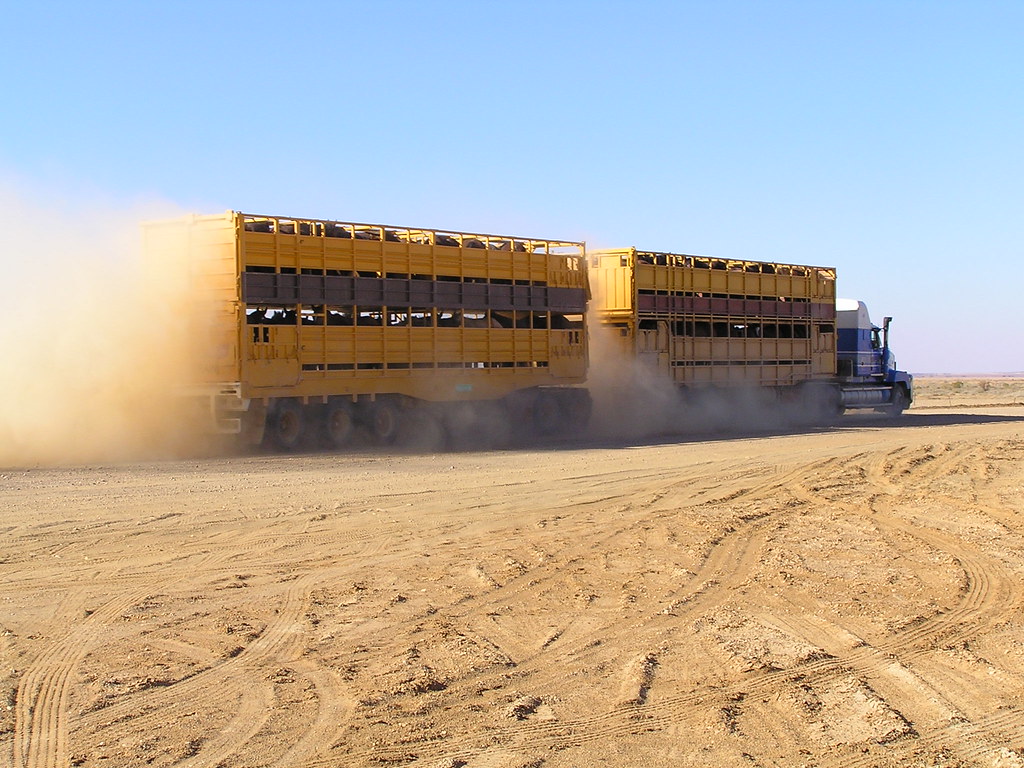
| MC Multi Combination | B-doubles, low loader combinations and road trains. The highest heavy vehicle class in New South Wales | A class HR or HC licence, or equivalent, held for at least 1 year. A medical assessment is also required |
Light Rigid and Medium Rigid are alternatives, not consecutive steps
The Light Rigid (LR) and Medium Rigid (MR) licence classes sit beside each other in New South Wales rather than one above the other. Both require one year on a full class C car licence, and neither requires the other first.
Choose between them by the vehicle you intend to drive. Light Rigid covers trucks up to 8 tonnes gross vehicle mass. Medium Rigid covers two-axle trucks and buses above 8 tonnes. If the vehicle you will actually be driving is a two-axle truck over 8 tonnes, apply for Medium Rigid directly. Taking Light Rigid first adds time and cost without advancing you toward Medium Rigid.
Heavy Rigid requires two years on a car licence, not one
The Heavy Rigid (HR) licence class requires you to have held a full class C car licence, excluding a learner licence, for two years or more. This is double the tenure that Light Rigid and Medium Rigid require.
Heavy Rigid is the most common eligibility mistake in New South Wales heavy vehicle licensing, because LR and MR both take one year and HR appears to be the next step up from them. It is not. Heavy Rigid reaches back to your car licence independently and asks for two years of it. Check the issue date on your full class C licence before you plan an HR application.
Multi Combination accepts a Heavy Rigid licence, so Heavy Combination is optional
The Multi Combination (MC) licence class requires one year on either a Heavy Rigid (HR) or a Heavy Combination (HC) licence. You do not have to obtain Heavy Combination before applying for Multi Combination.
This makes Heavy Rigid the genuine decision point in the New South Wales class ladder. One year after obtaining HR you can apply for either HC or MC, which gives a Heavy Rigid licence holder two upward paths rather than one. Drivers aiming at B-doubles or road trains can go from HR straight to MC.
P2 tenure counts toward Heavy Combination and Multi Combination
Time held on a P2 provisional licence counts toward the tenure requirement for the Heavy Combination (HC) and Multi Combination (MC) licence classes in New South Wales. The qualifying clock runs while you are on P2.
You must hold an unrestricted licence before the upgrade itself goes through. The practical effect is that the waiting period is not wasted time: your tenure accumulates during P2, and the application proceeds once the provisional restriction is lifted.
Interstate and overseas licences under the "or equivalent" rule
Every tenure requirement in the New South Wales heavy vehicle class ladder reads "a class C licence or equivalent", and the phrase "or equivalent" is what admits interstate and overseas licence holders.
Transport for NSW assesses equivalence against your documented licence history rather than assuming it. If you accumulated your driving years outside New South Wales, gather that licence history before you begin counting tenure toward Light Rigid, Medium Rigid, Heavy Rigid, Heavy Combination or Multi Combination.
Sources
- NSW Government, Getting a heavy vehicle licence
- Service NSW, Apply for a heavy vehicle licence (LR, MR, HR and HC)